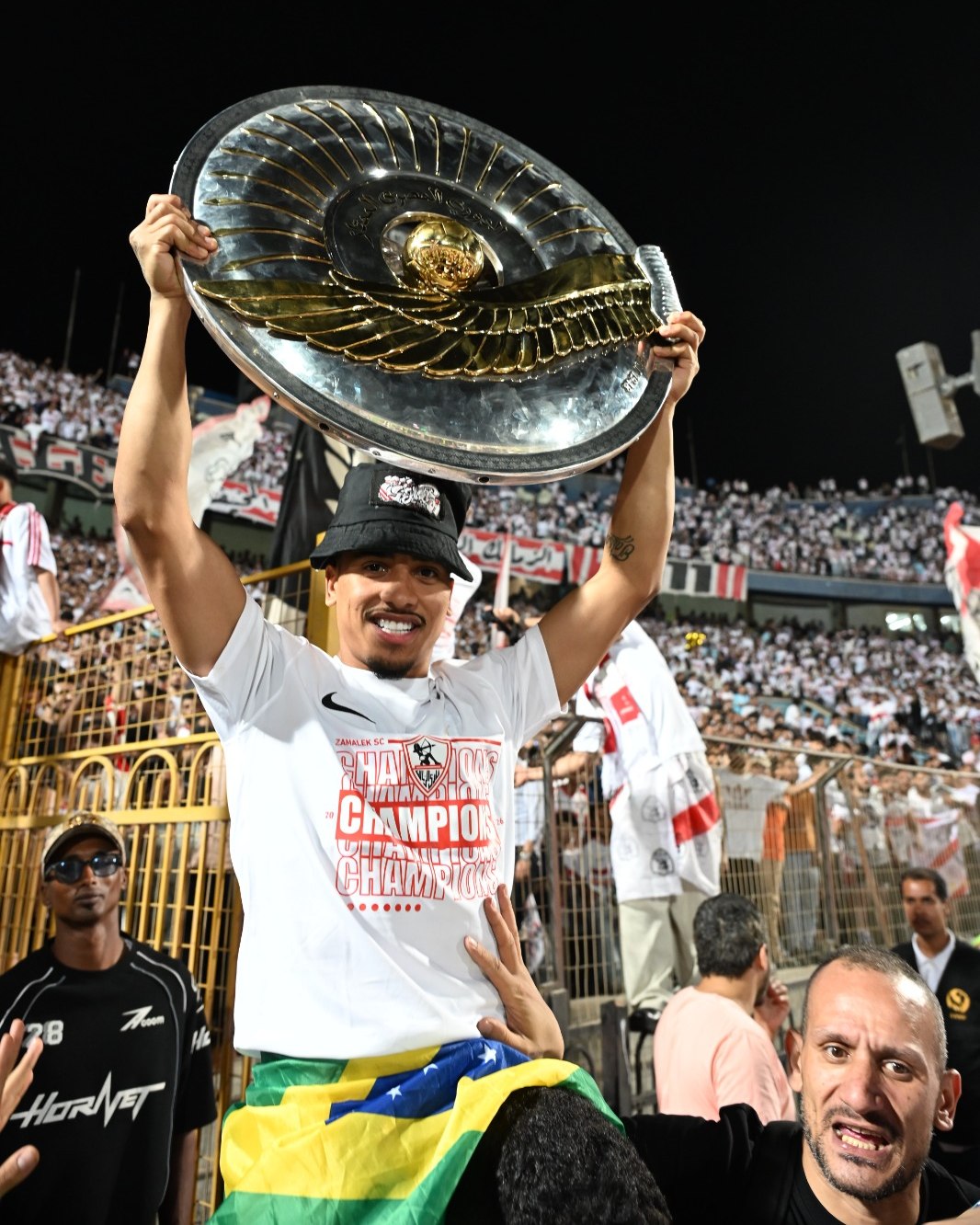
Zamalek is one of the one of the most decorated clubs in African football history.
They just won their 15th Egyptian Premier League title. Barely a headline anywhere. Because all our focus is on Saudi Arabia.
But what if the smarter play has been sitting right there in Cairo the whole time?
See it this way, while Public Investment Fund (PIF) have poured hundreds of millions annually into the Saudi Pro League (SPL), the world's most demographically powerful football market in Africa and the Arab world is being almost entirely overlooked.
The mismatch is hard to ignore once you see it:
Egypt has approx. 107M people. Median age around 24. A diaspora of more than 10M spread across the globe. One of the most passionate football cultures on earth.
Saudi Arabia has 35M people. A market built deliberately, with government capital, from the top down.
And yet the capital flows look like the inverse of the opportunity. Zamalek's title week made this concrete.
Days before lifting the league trophy, they lost the CAF Confederation Cup final to USM Alger. Cairo was down. Then Wednesday came, and those same streets erupted.
That swing from continental heartbreak to domestic euphoria in the space of weeks, is not something you can write a cheque for. Saudi Arabia is still in the process of building that. Al Ahly and Zamalek have been producing it for over a century.
The bull case for Egyptian football :
1️⃣ Organic cultural equity built over 100 years. There is no shortcut to it and no amount of transfer spending that replicates it.
2️⃣ CAF dominance gives Egyptian clubs a continental brand reach across 1.4 billion people in Africa and MENA. Saudi Arabia has no equivalent foothold there.
3️⃣ Entry valuations remain low. Currency headwinds and infrastructure gaps have compressed prices well below what comparable passion markets command. Ripe for patient capital.
4️⃣ Commercial upside is almost entirely untapped. Sponsorship, naming rights, streaming, Saudi Arabia monetises aggressively from day one. Egypt has not seriously started.
5️⃣ The talent pipeline still works. Egypt produces elite players at academy costs a fraction of Europe's. A structured development model could generate outsized returns on transfers alone.
Do not get us wrong, the risks are real and should be priced in honestly. Currency exposure is structural, hard currency deal architecture is not optional. Also governance opacity creates friction that institutional capital is not used to navigating.
Neither changes the fundamental asymmetry. We are not saying Saudi Arabia is a bad investment, it clearly isn't. It just happens to be crowded, expensive, and state-engineered.
So to the investors out there, with patient capital, Egypt is the opposite of all that.