"I know people say, 'you can't blame the Glazers' - yes, you can! Because it's 10 years of failure and miserable recruitment. It comes down to the fact that they've not got a sporting director, a proper head of recruitment in place." - Gary Neville (English football pundit & Manchester United Legend)
Why have a sporting director?
A sporting director is the modern-day orchestrator and conductor within a football club. Their main job is to create a culture of alignment between the playing style of the team and the philosophy or DNA of the football club.
The sporting director achieves this by ensuring all activities are consistent with the culture, values, and DNA of the club.
A sporting director oversees a number of critical parts of the club. These include:
1st Team Manager (Male & Female) and Head Coach U23s Team Manager and Head Coach Head of Recruitment and Scouting Network Loans Manager Management and movement of players in and out of the club Academy Manager Head of Performance / Sport Science Head of Medical Services Head of Performance Analysis (playing and recruitment) The Training Ground The Community Foundation / Charitable Trust
"A vision without a plan is just a dream. A plan without a dream is boring." - Anonymous
For a sporting director to be successful, they need to communicate a coherent vision that has ideally been set by the board of the football club.
The sporting director is the person who defines goals and objectives that align with the club's philosophy and culture. They also ensure that best practices are implemented and the most qualified personnel are hired to achieve these objectives.
"You're only as good as your last signing" - Anonymous
It is wrongly believed that recruitment is the primary determinant of a sporting director's success. Although recruitment is a significant part of the job, it is fair to say the role of a sporting director is multifaceted and extends well beyond having a well-run and efficient recruitment department.
The sporting director is responsible for determining goals and objectives, ensuring they are consistent with the club's overall philosophy and culture. For example, a club with a philosophy of developing and nurturing talent to generate revenue through sales cannot have a sporting director who decides to pursue top football stars when their approach contradicts this philosophy.
A sporting director is responsible for the overall health of the environment within the club and its long-term sustainability.
The sporting director must deeply understand the football community's values and ensure these can be translated into the culture of the football team in terms of passion, playing style, mental strength, and hard work. When club fans see their values represented on the field through the team's play, they become more passionate, their loyalty increases, the club's brand identity is validated, and this attracts sponsors and promoters to grow the business.
Football Club Hierarchy
The sporting director works above the head coach and below the board, but their role is key to supporting the head coach.
They must be skilled at managing upward by keeping the board informed and shaping their understanding of decisions that could be taken in managing the football club. In essence, a sporting director must be adept at managing both up and down.
In some schools of thought, it is considered strategic to include the sporting director on the board of directors.
As key decisions related to the strategy of a club are decided in the boardroom, if sporting directors aren't included in these discussions, how will they ensure their intended strategy is well implemented?
Relationship with the Head Coach
"A good sporting director is a safeguard of alignment and of the culture of the club" - Damien Comolli (Ex Sporting Director - Liverpool F.C.)
The sporting director is tasked with supporting the head coach using the resources at their disposal. They accomplish this by placing capable personnel in each department they oversee. A high-performing sporting director provides the best players, facilities, and medical services to the head coach to enable their success.
A successful head coach directly contributes to the club's success, which in turn reflects well on the sporting director. However, when a head coach underperforms, the sporting director often bears much of the blame, as it could be considered a result of inadequate support, among other factors.
Communication between the sporting director and the head coach is commonly expected to be daily. However, an effective sporting director need not be present at the training ground every day. They must maintain close proximity to the head coach while giving them the space they require to operate without feeling undermined.
The relationship between the head coach and the sporting director is instrumental in crafting a successful culture. The sporting director ensures that all aspects of the club's strategy—recruitment, coaching, and long-term vision—stay aligned and consistent.
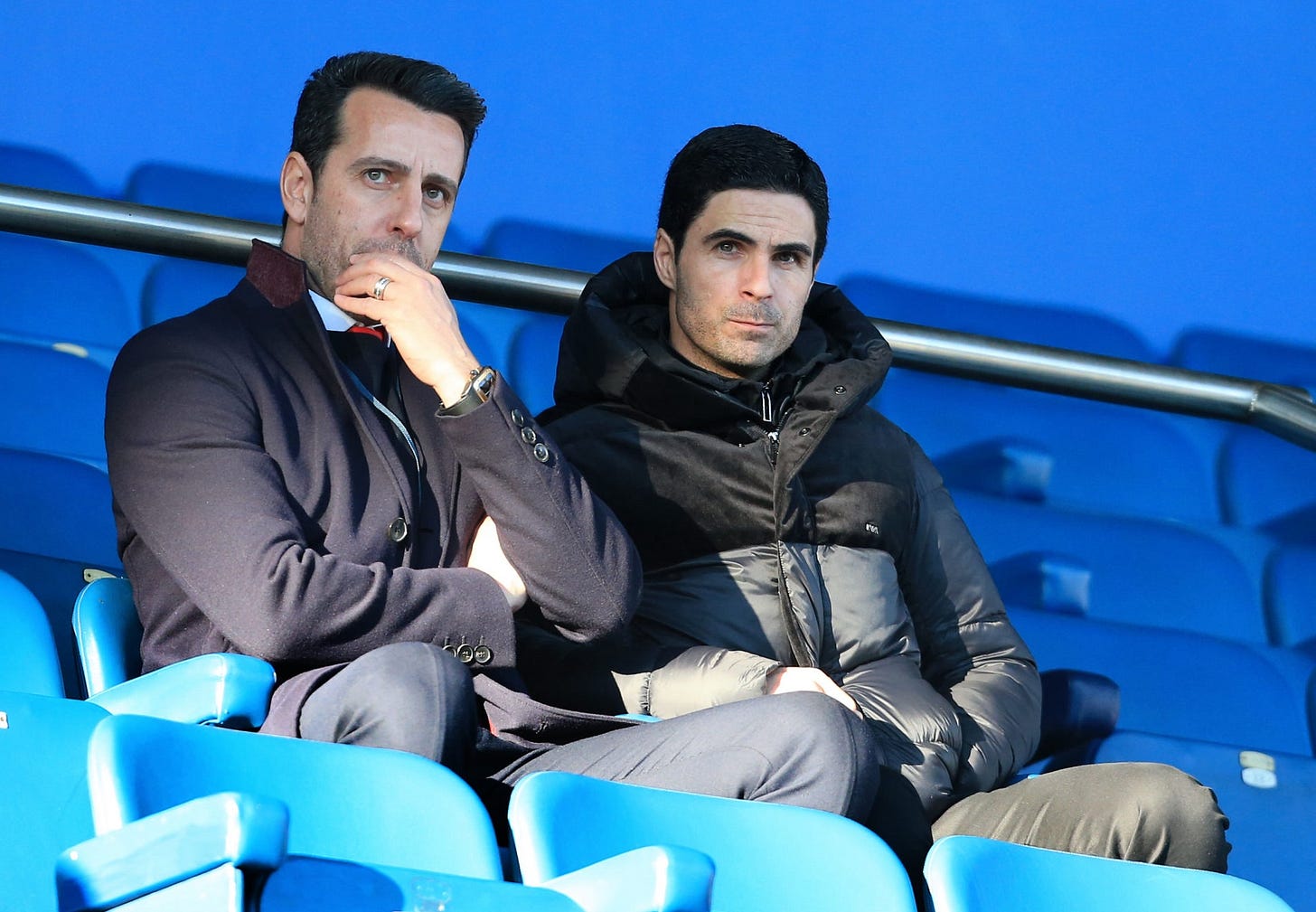
Edu - Ex Sporting Director at Arsenal F.C. & Mikel Arteta - Football Manager at Arsenal F.C.
The Need for a Coherent Football Philosophy
The football club requires a clearly articulated playing style that is aligned from the under-7s all the way to the first team. They must play the same way, train the same way, and ideally win the same way, with the same values and principles.
To establish a playing style, the sporting director must understand what the football community wants to see in the team. This allows the recruitment strategy to align with the playing style, which then enables the community to become more passionate about the players representing the club, as they clearly share the attributes valued by the community.
Attributes like passion, attacking football, and highly skilled technical players are all various traits that can be used to develop a playing style. A consistent playing style optimizes talent; if the head coach applies the playing style correctly, it results in player development, increasing player values, and team success, which leads to increased club valuation.
A clear playing style also makes it easier to build all the foundations needed to achieve goals and objectives, from training methods to medical team expectations—all aspects of the mechanism become synchronized.
Recruitment is Key
Two key responsibilities of the sporting director from a recruitment perspective involve ensuring worldwide knowledge of players, transfer targets, and market values for transfers and wages, while also maintaining a top-class recording and database system for player analysis. This includes performance analysis of the club's own players from senior professionals to academy players.
There must be synergy between the head coach and the sporting director regarding recruitment. The sporting director relies on analysis from the Performance Analysis team to obtain the clearest information needed for effective decision-making, which is based on clear facts and understanding of the environment.
Typically, before a player is recruited, a buying committee determines if the player fits the club's values and ethos, its playing style, and whether they would be a worthy financial investment. It is standard practice that a player is only recruited when the head of the scouting department, head coach, sporting director, and CEO are all aligned. If any of these members object, best practice dictates that the purchase should not proceed.
Although a sporting director plays a decisive part in this buying process, it remains a collective effort. The sporting director must ensure that a potentially valuable player for the club has the best chance of convincing all those in the buying committee, to avoid missed opportunities and later regrets.
A common rule of thumb to minimize recruitment risk is to accumulate 2,000 minutes of visual observation time on a player before making an assessment. Big data analysis of a player's attributes and statistics should be used alongside traditional recruitment methods, as neither can stand alone. Traditional recruitment methods via feedback from scouts continue to play a key role in filtering out unsuitable players.
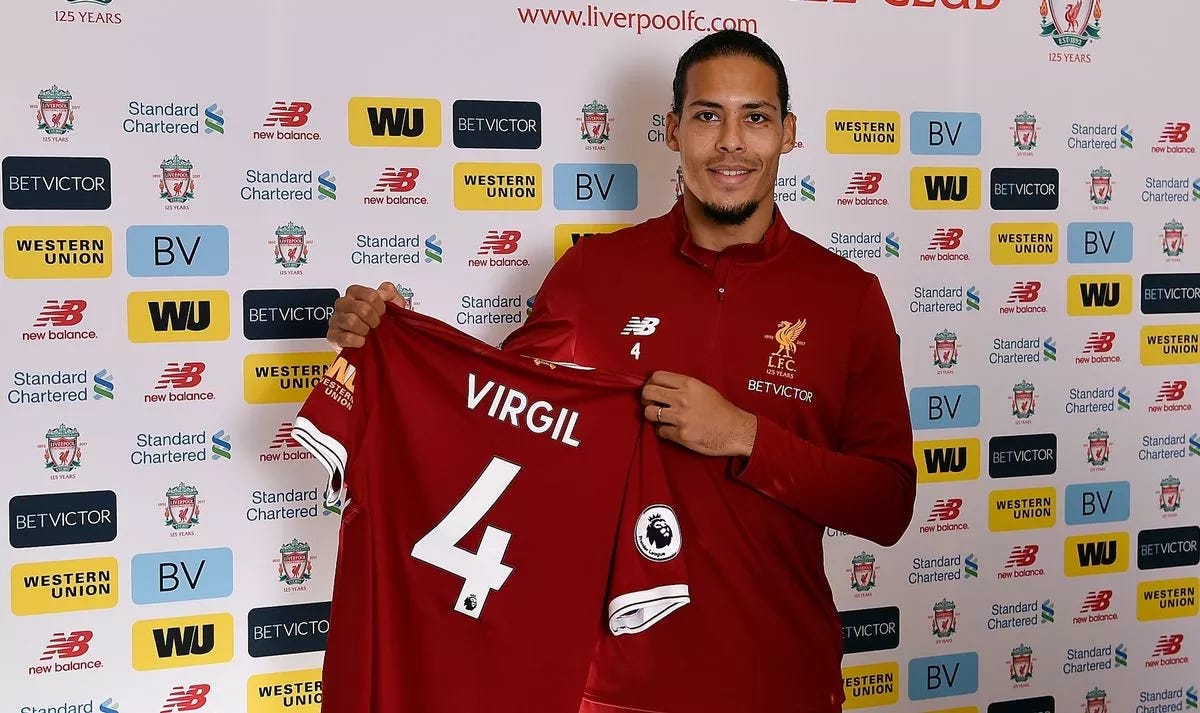
Virgil van Dijk - Liverpool F.C star defender signed in 2017
The Need for Management Skills
"It's the process of working with others to ensure the effective execution of a chosen set of goals." - Nitin Nohria (Ex Dean HBS)
In the context of a sporting director, management more precisely involves pooling together all available resources to achieve the key goals and objectives they have set.
A sporting director must therefore be well-versed in the art of communication, both within the football club organization and potentially externally when dealing with the media.
To achieve set goals and objectives, it is imperative that a sporting director can inject confidence and lead, with the ability to make decisions confidently backed by empirical data, extensive knowledge, and insights.
The Need for Continuous Learning
"I constantly see people rise in life who are not the smartest, sometimes not even the most diligent, but they are learning machines. They go to bed every night a little wiser than they were when they got up and boy does that help, particularly when you have a long run ahead of you." - Charlie Munger (vice chairman of Berkshire Hathaway)
With the ever-changing landscape of the football industry, where new mechanisms are being used to stay ahead of the curve—from big data to advanced AI models—being able to stay well-informed and updated on a vast array of topics has never been more vital.
A sporting director seeking success should recognize that continuous learning is a lifelong journey, and like every investment, it pays dividends during its lifetime. It is therefore imperative that sporting directors become learning machines and stay ahead of the curve regarding the latest breakthroughs in management practices, sports science, data analysis, and other areas critical for current and future success in the role.
Therefore, it would be wise not to rest on one's laurels and avoid experience reliance creep, instead leaning toward a growth mindset. Sporting directors should also draw knowledge from their departments and always seek to be listeners first rather than speakers in the room. They should aim to discover new inputs and information in meetings with their reports, which provides a better canvas for drawing conclusions and ultimately allows for better strategizing toward set goals and objectives.